Dreading January already? These December money habits could change everything



 Read time: 3 minutes
 Published: 13th January 2026


For many households, January feels bleak long before the cold weather is factored in. Bank balances dip, bills land, and a new year begins with financial regret rather than optimism.
One money expert says the problem is not how people budget in January, but what they fail to do in December. While most of us are focused on Christmas, December can be the most powerful month of the year for protecting your finances and resetting your relationship with money.
Joe Lytwyn, personal finance expert at thimbl, says a handful of small, deliberate actions before Christmas can make the difference between a calm January and one filled with stress.

"Many people wait until January to ‘sort their money out’, but by then the damage is already done," Joe says. "December is when financial habits are set, bills are locked in, and emotional spending peaks. Get ahead of it now, and January instantly feels lighter."
Here are six useful money moves Joe says could be worth making this month.
Freeze the damage before it happens
One of the simplest things people can do in December is mentally close last year’s spending. Joe suggests choosing a firm stop date for non-essential purchases.
"That might be 15 December, 20 December, or whenever your Christmas shopping is done," Joe says. "After that, anything extra feels small but quietly adds up.
"Many people underestimate how much is spent in the days between Christmas and New Year. Boxing Day sales, last-minute top-ups, and boredom scrolling can easily undo good intentions. Deciding now that festive spending has a clear endpoint creates an invisible but powerful boundary."
Book your January before it books you
A surprisingly effective anti-January blues tactic is to pre-plan one controlled expense in the new year. This might be a cheap night away, a cinema membership, a meal out, or even a single takeaway.
"When people overspend in December, January becomes a punishment month," says Joe. "That ‘all or nothing’ thinking creates resentment and emotional spending later on.
"By planning and budgeting for one small January treat now, you could avoid the boom-and-bust cycle that leads to guilt spending in February and March."
Audit your subscriptions
Many people are more ruthless about money right before Christmas than they are at any other time. This makes December the ideal moment to cancel unused subscriptions.
Streaming services, fitness apps, delivery passes, and cloud storage can quietly renew in January when people are too busy returning to work to notice. Taking ten minutes now to cancel anything unused can free up cash immediately.
"If it has not been worth the money in December, it will not magically be worth it in January," says Joe.
Use returns as a financial reset
January returns are often seen as a hassle or disappointment, but experts say they could instead be viewed as a financial opportunity.
Returning an unwanted gift to a card or account can act as a psychological buffer against January bills. Instead of absorbing those refunds into everyday spending, Joe suggests you could treat them as a mini emergency fund or use them to reduce your credit card balance.
"That money has already been spent once in your mind," he says. "Using it wisely reduces stress far more than buying something else."
Move one bill, not all of them
January money advice often urges people to reorganise their entire finances at once. In reality, this is overwhelming and rarely sticks.
A more realistic approach is to improve just one thing before the year ends. That could mean moving a mobile contract, switching an energy tariff, or cancelling an overdraft.
"One small improvement can reduce financial noise," says Joe. "Clarity is what stops money anxiety. Once you’ve sorted one expense, move on to the next when you’re ready."
Stop punishing yourself for Christmas
Perhaps the most important December rule is psychological rather than practical. Experts warn that beating yourself up for festive spending can often lead to worse financial behaviour later.
Guilt-driven saving plans, aggressive bans, and overly strict budgets tend to collapse within weeks.
"A healthy relationship with money is one where you feel in control, not ashamed," says Joe. "January should be about momentum, not self-punishment."
By taking a calmer, earlier approach in December, households give themselves a head start that many people do not realise is possible.
Joe adds: "The best way to avoid the January blues is to stop them forming in the first place."
You get all this with thimbl

Tap and go
Quick and easy contactless payments up to £100.

Secure banking app
Manage your credit card online, wherever and whenever you like, with the free mobile app.

A trusted service
Over 4,500 positive reviews from our customers.
48.9% APR Representative (variable)
Quick links

Worried about money?
If you're worried about the cost of living, need support with budgeting, or think you might need debt advice, StepChange could help. They offer free and impartial support and help hundreds of thousands of people every year to deal with their debts and take control of their finances.
To find out how StepChange could help you, take the free Money Health Check. It's quick and easy to complete, and will give you a personalised recommendation on what to do next.
Credit Builder Credit Card
Over 200,000 people have already been accepted for a thimbl Credit Builder Credit Card
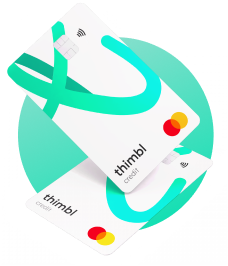
 Check if you're eligible with no impact to your credit scorePersonalised credit limit between £200 and £2,000
48.9% APR Representative (variable)
Meet the team

Head of Compliance

Head of Partnerships

Managing Director, thimbl

Marketing Manager, thimbl

Financial Content Writer
Need help or support?
Whether it's a question or you just need support, we're here to help.


