Explore the factors that could be affecting your score
Why Has My Credit Score Gone Down?



 Read time: 5 minutes
 Published: 1st June 2026


There are three main credit reference agencies (CRAs) in the UK: Equifax, Experian, and TransUnion. Each CRA has their own credit scoring system, meaning your score may vary between them.
Seeing a decline in your credit score can feel disheartening, especially if you’re not sure what’s caused it.
There are a number of reasons your credit score may have dropped, and in our guide, thimbl shares some common causes, as well as what you can do to work towards a healthier credit position.
Why has my credit score dropped?
We’ve included a list of some of the reasons your credit score may have declined. These are just some examples:
- You’ve made a late payment or missed one altogether
A late or missed payment on your bills or current credit commitments could harm your credit score. - You’ve made multiple applications for credit in a short period of time.
When you apply for credit directly with a provider, they will carry out a creditworthiness assessment. This will include either a hard search or an Open Banking check. A hard search will be recorded on your credit file for up to 12 months, and multiple hard searches in a short space of time could cause your credit score to drop. - Your credit utilisation has increased
Your credit utilisation is the amount of money you currently owe relative to the overall credit available to you, shown as a percentage. It’s generally recommended to try to keep your credit utilisation below 30%. A higher credit utilisation could suggest poor financial habits and have a negative effect on your credit score.
We’ve included an example of how credit utilisation works below.
| Type of borrowing | Credit limit | Amount of credit being used | Credit utilisation |
|---|---|---|---|
| Credit card (one) | £2,000 | £200 | 10% |
| Credit card (two) | £500 | £100 | 20% |
| Overall credit limit across both credit cards | Overall credit utilisation across both credit cards |
|---|---|
| £2,500 | 12% |
This example is for illustration only.
- Your credit limit was reduced
Using the above example again, let’s say that the credit limit on credit card one is reduced to £1,000. Now, your calculations look like this:
| Type of borrowing | Credit limit | Amount of credit being used | Credit utilisation |
|---|---|---|---|
| Credit card (one) | £1,000 | £200 | 20% |
| Credit card (two) | £500 | £100 | 20% |
| Overall credit limit across both credit cards | Overall credit utilisation across both credit cards |
|---|---|
| £1,500 | 20% |
You haven’t spent any more money, but the reduction of one of your credit limits means that the credit utilisation on both the individual credit card and your overall borrowing has increased. This could cause your credit score to fall.
- You’ve used your credit card to withdraw money from a cash machine or bank
This is known as a cash advance, and could be viewed as a red flag for poor money management. - There’s been a negative change to the credit score of someone you’re financially associated with
Financial associations include anyone you share a joint account or bills with. Did you know that their credit score could influence your own? For instance, if you’re financially linked with someone who has a bad credit score, your own score could decline as a result. - You’ve viewed your credit score with a different CRA
You might be interested in reading our guide on the different credit scoring systems for the three main CRAs in the UK: Experian, Equifax, and TransUnion. It’s also worth checking to see whether your CRA has updated their scoring system, as this could also affect your credit score. - You have been a victim of fraud
If someone has stolen your identity, they could make an application for credit in your name. This could show up on your credit file as a hard search or an opened account that you don’t recognise. If you suspect that you’ve been a victim of fraud, contacting the company that made the search as soon as your can. You can also raise a dispute with the CRA.
Why has my credit score gone down when nothing has changed?
Why did my credit score drop for no reason?
Sometimes, the reason for a decline in your credit score might not be obvious. As we’ve discussed in the section above, being a victim of fraud could harm your credit score, and this may not even be something you’re immediately aware of.
You might think that your financial situation hasn’t changed, but did you know that additional factors could be influencing your credit score without you knowing? For example, moving house could cause a temporary decline in your credit score if you don’t update your information on the electoral register.
If you notice that your credit score has gone down and you’re not sure why, it’s important to investigate sooner rather than later. We’ll explain the steps you could take in the section below.
Why has my credit score suddenly dropped? What should I do if my credit score has gone down?
- The first thing to do if you notice that your credit score has gone down is to try to establish why it’s dropped. The quickest way to get answers is by checking your credit report.
- Carefully scan your credit report for any recent hard searches or activity that you don’t recognise.
- Dispute any unrecognised information with the provider/ CRA.
- Take action against any fraudulent activity as soon as possible.
- Focus on rebuilding your credit score. We’ll list several ways you could do this in the section below.
How can I build my credit score back up?
- Check your credit report
Make a habit of checking your credit report. Keeping on top of your credit report is important; the information on your file should be up-to-date, and you should make a habit of going through any hard searches that have been recorded. In the event that you’ve been a victim of identity fraud, regularly viewing your file could help you spot the signs early and stop it in its tracks. - Register to vote
If you’re asking, ‘how can I improve my credit score?’, this tip may come as a surprise. You might not think that the electoral role has much to do with your credit score, but it really can – and does – have an impact. Registering to vote at your current address can make it easier for potential lenders to verify your identity, and this could boost your credit score. - Pay your bills and any current credit commitments on time each month
It’s important to make your necessary regular payments in full and on time. - Do you have a credit card?
If so, stay within your credit limit, try to keep your credit utilisation below 30%, and avoid using your credit card to withdraw cash.
If the decline in your credit score has been caused by a change to your credit utilisation, you may wish to prioritise clearing your balance(s). Providing you don’t use your credit card to make new purchases or take on any new credit commitments, your credit card utilisation will reduce, and you could notice your credit score climb back up. - Be mindful of the number of hard credit searches you undergo
Remember, multiple hard searches in a short space of time could cause your credit score to drop.
Some credit providers offer an eligibility check with no impact to your credit score, which allows you to see your chances of approval before you make a full application. This could help to reduce the number of hard searches on your credit file. - Do some research into a credit builder credit card
With consistent, responsible use, a credit builder credit card could help you do just that: build your credit score. This type of credit card comes with a manageable starting credit limit to help you stay in control of your spending and work towards a healthier credit position with confidence.
Related post: How to Check your Credit Report and Score for Free
The thimbl Credit Builder Credit Card
The thimbl Credit Builder Credit Card comes with a personalised starting credit limit between £200 and £2,000.
- Use your thimbl Credit Builder Credit Card to make an affordable, manageable purchase.
- Make a least the minimum repayment amount off your credit card each month.
- Your repayments will be reported to the credit reference agencies (CRAs), and with consistent positive use, you could see an improvement in your credit score over time.
Check your eligibility for the thimbl Credit Builder Credit Card with no impact to your score*
You’re welcome to check your eligibility for the thimbl Credit Builder Credit Card if you:
- Are between the ages of 18 and 75;
- Are a UK resident with at least 1 year's UK address history;
- Have a monthly net income of at least £800;
- Have an active credit account that has been open for a minimum of 4 months; and
- Do not already hold a Zable credit card.
thimbl is a credit broker. The thimbl credit card is powered by Zable, a trading name of Lendable Ltd. Lendable Ltd is unable to consider applications from anyone who has declared bankruptcy or is in an Individual Voluntary Arrangement (IVA).
How long will it take to improve my credit score?
When asking ‘how long will it take for my credit score to improve?’ it’s crucial to be aware that there is not a set timescale. The time it takes for your credit score to improve will depend on a number of things, including the factors affecting it.
For example, a county court judgement (CCJ), will stay on your credit file and could affect your credit score for up to 6 years. On the other hand, something like forgetting to update your address on your credit file could be easily rectified and may only cause a temporary decline in your credit score.
When working towards a healthier credit position, you should try to combine as many credit-building techniques as possible.
Improving your credit score isn’t something that happens overnight, but consistency is key.
Find out more in our guide: How Long Does it Take to Improve Your Credit Score?
What to do if you can’t repay your credit card
If you’re struggling to make your credit card repayments, please contact your provider as soon as you can.
They will be keen to work with you to put a plan in place.
Money worries can feel frightening and all-consuming. Please know that you can get free, financial advice from any of the following charities and organisations: StepChange, MoneyHelper, Citizens Advice, and National Debtline.

Page last reviewed: 1st June 2026
Page reviewed by: Harry Lawrance
You get all this with thimbl

Tap and go
Quick and easy contactless payments up to £100.

Secure banking app
Manage your credit card online, wherever and whenever you like, with the free mobile app.

A trusted service
Over 4,500 positive reviews from our customers.
48.9% APR Representative (variable)
Quick links

Worried about money?
If you're worried about the cost of living, need support with budgeting, or think you might need debt advice, StepChange could help. They offer free and impartial support and help hundreds of thousands of people every year to deal with their debts and take control of their finances.
To find out how StepChange could help you, take the free Money Health Check. It's quick and easy to complete, and will give you a personalised recommendation on what to do next.
Credit Builder Credit Card
Over 200,000 people have already been accepted for a thimbl Credit Builder Credit Card
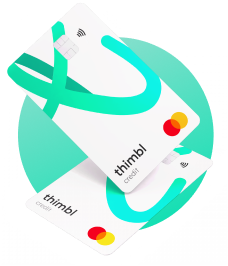
 Check if you're eligible with no impact to your credit scorePersonalised credit limit between £200 and £2,000
48.9% APR Representative (variable)
Meet the team

Head of Compliance

Head of Partnerships

Managing Director, thimbl

Marketing Manager, thimbl

Financial Content Writer
Frequently asked
questions
If you've got a question, you may just find the answer you're looking for here. If not, please visit our contact us page and get in touch.
What will my credit limit be?
You will always be made aware of any credit limit changes to any credit cards you have beforehand, and you do not have to accept a credit limit increase if you don't feel it's right for you.
What happens if I fail to make my repayments?
Missed payments will be reported to the credit bureaus, and your account will appear as in arrears. You will be charged a late fee, which is usually around £12. Your credit rating is also likely to decline as a result.
You should try to make your missed payments as soon as possible.
If you're struggling to keep on top of your repayments, you can find free, impartial advice from MoneyHelper, StepChange, Citizens Advice and National Debtline
If you want to know more about how credit cards work, you can read our blog.
Did you find this article helpful?
Let us know how we can be more helpful
Please leave your anonymous feedback to help us keep improving.
Need help or support?
Whether it's a question or you just need support, we're here to help.


