Payment options to consider when buying foreign currency
Can I Buy Euros with a Credit Card?
thimbl looks into the various ways you could pay for euros and other types of foreign currency, as well as offering tips on how to save money on exchange rates.



 Read time: 6 minutes
 Published: 27th November 2025


Jetting off overseas on your hols?
Sorting out your holiday spending money is a big part of any trip – but it can also be a minefield.
You might have asked, ‘can I purchase foreign currency with my credit card?’ and the answer is yes, you can, although you may wish to consider other options beforehand.
In our guide, we take a closer look at some of the potential pros and cons of using your credit card to buy euros, as well as listing some alternative methods that could be suitable for you.
Can I use a credit card to buy euros?
Depending on your provider, you could use your credit card to buy euros, although it’s worth noting that this isn’t your only option, and other types of payment could work out cheaper.*
Are there any fees when buying euros with a credit card?
A cash advance fee, usually 3% of the transaction cost, is typically charged when you use your credit card to withdraw money or buy currency. If you’re using your credit card to buy euros overseas, you could be charged an additional 3%.
Unless you can take advantage of a promotional no-interest period on your account, you will be charged interest on any transactions that you make on your credit card. However, if you clear the balance of your credit card on time and in full each month, you shouldn’t be charged interest.
Will using my credit card to buy euros affect my credit score?
Using your credit card to pay for euros will not affect your credit score directly, though how you manage your credit card will have an impact on your credit score.
Below, we’ve listed three ways that your credit score could be negatively affected by a credit card.
- Credit limit
Your credit limit is the total amount of money that you can spend on your credit card. You must make sure that your spending, interest, and any other charges do not take you over your credit limit. Before you use your credit card to buy euros, it’s vital to check the available balance on your credit card account. If you try to spend more than your credit limit, your transaction could be declined, and your credit score could be affected. - Cash advance
Using your credit card to withdraw cash from a cash machine is called a cash advance. Not only are you likely to be charged for this type of transaction, but it could also harm your credit score. - Repayments
You’ll need to make at least the minimum repayment amount due on your account each month. A late or missed repayment could damage your credit score, and you could also be charged a fee.
Alternatives to using your credit card to buy euros
- Debit card
Can you use a debit card to exchange currency? You can, and this could be something you consider, rather than using your credit card. Alternatively, you might choose to use your debit card abroad instead of cash. Please note that some debit card providers could charge a fee for overseas use, including withdrawing money from an ATM, so it’s best to check with your bank before you go. - Cash
Exchanging currency using cash is another option, although, as we mentioned earlier, using your credit card to withdraw money from a cash machine should be avoided. This is called a cash advance and could hurt your credit score. - A prepaid travel money card
A prepaid travel money card allows you to load a card with currency before you go on holiday, locking in the exchange rate. With some prepaid travel cards, you can add multiple currencies at the same time.
Your prepaid travel money card can be used in the same way as a debit card.
It’s important to note that some prepaid travel money cards could charge a fee(s), so it’s important to read the terms and conditions carefully to avoid any surprises. - Travel credit card
Some credit cards, such as the thimbl Credit Builder Credit Card, do not charge any fees on overseas spending.**
You can find out more about using a credit card abroad in our guide here.
Top tip: when travelling, it’s a good idea to have a backup payment method with you, just in case something goes wrong. For example, if you’re intending to primarily use cash abroad, you might consider loading some extra money onto a prepaid travel card in case the unthinkable happens and your cash is stolen or lost.
Can you tell me more about the thimbl Credit Builder Credit Card?
We’d be happy to!
The thimbl Credit Builder Credit Card could help you do just that: build credit and work towards a healthier credit position.
Use your thimbl credit card to cover an affordable, necessary purchase and then make at least the minimum repayment amount due each month. If your finances allow, you should make more than the minimum repayment amount. Remember, if you clear your balance in full and on time each month, you shouldn’t be charged any interest.
Your repayment habits will be reported to the credit reference agencies (CRAs), and over time, with regular and responsible use of your credit card, you could notice an improvement in your score.
- For all credit levels, from poor to excellent
- Checking won’t affect your credit rating
- 48.9% APR Representative (variable)
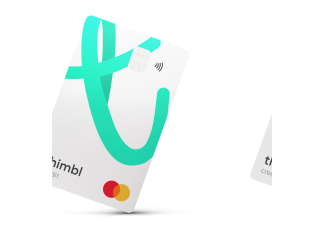
Check your eligibility for a thimbl credit card in just 90 seconds with no impact to your credit score***
You can check your eligibility for the thimbl Credit Builder Credit Card if you:
- Are between the ages of 18 and 75
- Are a UK resident with at least 1 year's UK address history
- Have a monthly net income of at least £800
- Have an active credit account that has been open for a minimum of 4 months; and
- Do not already hold a Zable credit card.
Credit is provided by Lendable Ltd. Lendable Ltd is unable to consider applications from anyone who has declared bankruptcy or is in an Individual Voluntary Arrangement (IVA).
Is it better to buy euros with cash or a card?
There isn’t really a ‘better’ way to buy euros – it’s very much down to personal preference.
When paying for euros, you should do what’s best for you and your financial situation. It’s worth looking into the different payment options listed in the ‘Alternatives to using your credit card to buy euros’ section to familiarise yourself with all the methods that could be available to you before you decide.
Buying euros with a credit card: am I protected by Section 75?
‘Does Section 75 apply to foreign currency?’ is a great question.
Ordinarily, credit card purchases between the value of £100 and £30,000 are protected by Section 75.
Unfortunately, you’re not covered by Section 75 when using your credit card to buy foreign currency.
When’s the best time to buy euros?
When you choose to buy your euros can depend on the cost as well as convenience.
Perhaps you’re in the habit of keeping up to date with daily exchange rates and are waiting for a certain rate before you purchase, or maybe it’s just easier for you to pick up your euros at the travel agents when you pop in to collect your final documents.
There’s no right or wrong time to buy your currency; however, it might be an idea to avoid leaving your currency exchange until the very last minute, as airport rates tend to be a lot higher than high street bureaus. According to eurochange, you could save up to £169 by exchanging your money BEFORE you get to the airport.
Related post: Do You Need a Credit Card to Rent a Car?
What to do if you can’t repay your credit card
If you’re finding it difficult to make your credit card repayments, you should contact your provider. The sooner they’re aware of your situation, the sooner they can work with you to come up with a solution and help reduce some of the financial pressure you’re facing.
Worried about your finances?
Charities and organisations such as StepChange, MoneyHelper, Citizens Advice, and National Debtline offer free, confidential support.
*Please note, you can’t use your thimbl credit card to buy foreign currency, including euros.
**Please note that restrictions apply. You can find a full list of countries where you cannot use your thimbl credit card here.
***The thimbl credit card is powered by Zable. Zable is a trading style of Lendable Ltd. If you choose to make a full application, a creditworthiness assessment will be carried out by Zable. This will consist of a hard search and a further check powered by Open Banking. A hard search will remain on your credit file for up to 12 months, and multiple hard searches within a short period of time could hurt your credit score. Any credit obtained upon successful application will be provided by Lendable Ltd.

Page last reviewed: 27th November 2025
Page reviewed by: Harry Lawrance
You get all this with thimbl

Tap and go
Quick and easy contactless payments up to £100.

Secure banking app
Manage your credit card online, wherever and whenever you like, with the free mobile app.

A trusted service
Over 4,500 positive reviews from our customers.
48.9% APR Representative (variable)
Quick links

Worried about money?
If you're worried about the cost of living, need support with budgeting, or think you might need debt advice, StepChange could help. They offer free and impartial support and help hundreds of thousands of people every year to deal with their debts and take control of their finances.
To find out how StepChange could help you, take the free Money Health Check. It's quick and easy to complete, and will give you a personalised recommendation on what to do next.
Credit Builder Credit Card
Over 200,000 people have already been accepted for a thimbl Credit Builder Credit Card
 Check if you're eligible with no impact to your credit scorePersonalised credit limit between £200 and £2,000
48.9% APR Representative (variable)
Meet the team

Head of Compliance

Head of Partnerships

Managing Director, thimbl

Marketing Manager, thimbl
Financial Content Writer
Frequently asked
questions
If you've got a question, you may just find the answer you're looking for here. If not, please visit our contact us page and get in touch.
What will my credit limit be?
You will always be made aware of any credit limit changes to any credit cards you have beforehand, and you do not have to accept a credit limit increase if you don't feel it's right for you.
What happens if I fail to make my repayments?
Missed payments will be reported to the credit bureaus, and your account will appear as in arrears. You will be charged a late fee, which is usually around £12. Your credit rating is also likely to decline as a result.
You should try to make your missed payments as soon as possible.
If you're struggling to keep on top of your repayments, you can find free, impartial advice from MoneyHelper, StepChange, Citizens Advice and National Debtline
If you want to know more about how credit cards work, you can read our blog.
Did you find this article helpful?
Let us know how we can be more helpful
Please leave your anonymous feedback to help us keep improving.
Need help or support?
Whether it's a question or you just need support, we're here to help.


